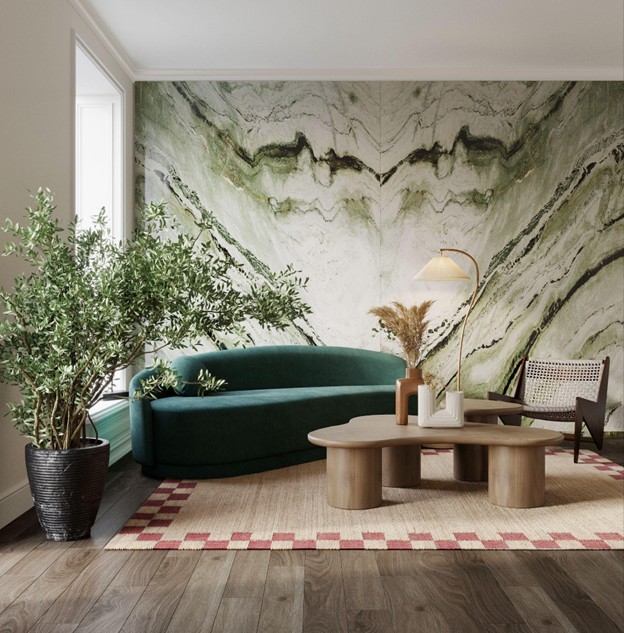
1. Understanding the Myth and the Reality
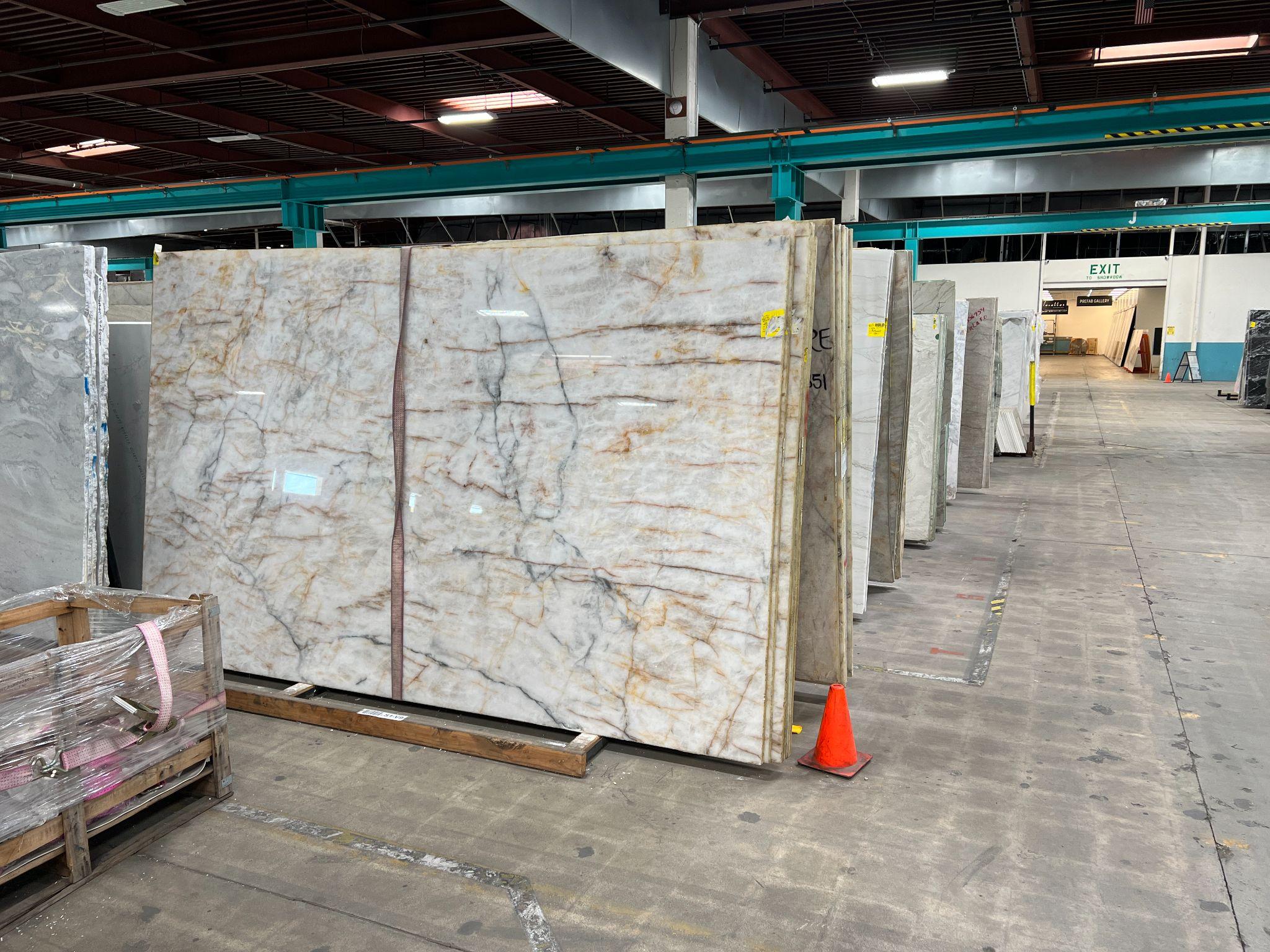
“Natural stone is less sustainable than engineered materials,” is a misconception we hear too often. The reasoning often goes like this: cutting and transporting huge blocks of stone consumes a lot of energy, and engineered materials (such as engineered quartz, composites, etc.) seem more reproducible, more controlled, therefore “greener.” But this oversimplifies a few key realities:
- Lifecycle & durability: Natural stone has an exceptionally long lifespan. When properly installed and maintained, it withstands decades, often generations, of use without needing replacement. In a world where material replacement is one of the greatest drains on resources, longevity is sustainability.
- Minimal chemical processing: Unlike some engineered surfaces, many natural stones require less chemical alteration. They are quarried, cut, finished, sealed, and installed, but they are not fundamentally reinvented in a factory with high volumes of synthetic resin, additives, or complex manufacturing processes.
- Recyclability & end-of-life: When a stone slab is removed (during a renovation, for example), it can often be repurposed. For example, it can be cut into new tiles, reused as landscaping, or crushed for aggregate. This potential keeps natural stone within a circular resource mindset.
The idea that stone must be “less sustainable” simply because it’s natural is outdated. The fact is: sustainability is about lifetime, reuse, and embodied value.
2. Natural Stone’s Sustainability Credentials
Let’s break down how natural stone delivers on sustainability across the design-build lifecycle:
- Embodied carbon & durability: Because natural stone lasts a lifetime (or longer), the embodied carbon per year of use is exceptionally low. A slab that sits for 30–50 years amortises the upfront energy intensively over time.
- Low maintenance, less replacement waste: Natural stone’s robustness (especially materials like granite, quartzite, or dolomite) means fewer repairs, fewer replacements, less landfill, and less waste.
- Wild-card value: reuse and repurposing: At the end of its lifespan, natural stone often has a second chapter, reclaimed in built-environment reuse, crushed for sub-base, or used in landscaping.
- Mineral-based and chemical-minimal: Unlike highly-engineered composite surfaces, natural stone is primarily a mineral finishing product. The processing may still involve cutting, polishing and sealing but it generally avoids heavy resins or chemical additives.
- Thermal mass & building efficiency: In certain architectural applications, natural stone’s inherent thermal mass can contribute to passive heating/cooling strategies, enhancing building performance over time.
3. Countering the Engineered Materials Narrative
“Engineered surfaces = greener” is a common misconception. But when applied critically, several counterpoints emerge.
- Replacement cycles tend to be shorter because design trends shift and finishes get outdated, which means higher waste volumes over decades.
- Recycling is limited or nonexistent for many composite materials. Natural stone, as noted, can often be reused or repurposed.
- Perceived “low cost” often hides lifecycle cost. A cheaper surface today may cost more tomorrow when you account for maintenance, replacement, disposal, and embodied value lost.
The eco-luxury story of engineered surfaces is not inherently superior to natural stone. In many cases, especially in high-end, long-life builds, natural stone is a smart choice.
4. BCS’s Commitment to Sustainability & Transparency
At Best Cheer Stone, our mission is to provide materials built on trust, heritage and environmental responsibility. Here’s how we live that out:
- Direct sourcing and transparency: BCS sources from our own quarries and factories, enabling better oversight of labor, environmental protocols and transportation footprints.
- Eco-friendly operations: Our facilities are committed to environmental guidelines, from quarry management practices to energy-efficient manufacturing and waste minimization.
- Quality = longevity: We view each slab as a lasting investment. By delivering premium natural stone that performs beautifully and enduringly, we align with the sustainability principle of “use it well, keep it long.”
- Supplier due diligence: BCS’s published guidance, such as “10 Questions to Ask Your Stone Supplier Before Your Next Project” emphasizes origin, quarry practices and environmental stewardship.
- Educating the market: Through blogs, showroom experiences and trade partnerships, BCS helps architects, designers and homeowners understand the full life-cycle value of stone, beyond initial cost or appearance.
- Stylistic and sustainable fit: Our collections, from slab sets to custom fabrication, are designed for high-performance architectures and luxury spaces where both design and sustainability are non-negotiable.
In choosing BCS, you’re choosing a partner who treats sustainability in stone as more than a box to tick. It reflects a mindset grounded in responsible sourcing, thoughtful use, and long-term legacy.
5. Practical Guidance for Specification & Design
For architects, developers and homeowners looking to integrate natural stone sustainably and strategically, here are key considerations:
- Specify for longevity: Choose stone types and finishes suited for the intended use case. High-traffic areas benefit from harder materials (e.g., granite, quartzite) to maximize lifespan.
- Consider quarry/transport geography: While stone may travel internationally, sourcing from your manufacturer’s integrated quarries (as BCS does) and optimizing transport logistics helps mitigate shipping impact.
- Avoid over-engineering: A design doesn’t always require ultra-exotic finishes. Opting for timeless natural stone rather than temporary trend surfaces ensures life-cycle efficiency.
- Plan for reuse / second life: In project close-out or renovation phases, specify how stone elements might be repurposed such as whole-slab reuse, flooring conversion, landscape blocks.
- Maintenance strategy matters: Natural stone’s low-maintenance profile is a sustainability advantage, but only if the right care (sealing, appropriate cleaners, avoiding harsh chemicals) is in place.
- Audit the full supply chain: With BCS’s transparency, you can trace from quarry to warehouse. This enables more meaningful sustainability certifications or reporting.
- Design for thermal/mass benefit where possible: In façade or interior mass-wall applications, leveraging stone’s thermal properties can contribute to overall building performance.
6. The Eco-Luxury Proposition
Natural stone is a lasting asset. By choosing stone from a partner like BCS, you’re also choosing:
- A material with real heritage and market perception of luxury
- The assurance of durability and minimal waste
- A supplier who values transparency, sourcing integrity and environmental stewardship
- The design freedom that arises when form, function and sustainability align
For developers and architects, that translates into buildings that hold aesthetic and ecological value over decades. For homeowners, it means a material that stands the test of time while making a responsible statement.
7. Re-writing the Equation
In the sustainability equation, natural stone often starts as the underdog, but when you apply the full lens of lifecycle thinking, reuse potential, minerality and durability, it quickly becomes a front-runner. The equation isn’t “natural vs. engineered” in isolation. It’s:
Material impact = (embodied + operational + end-of-life) / years of useful service.
Visit Best Cheer Stone